
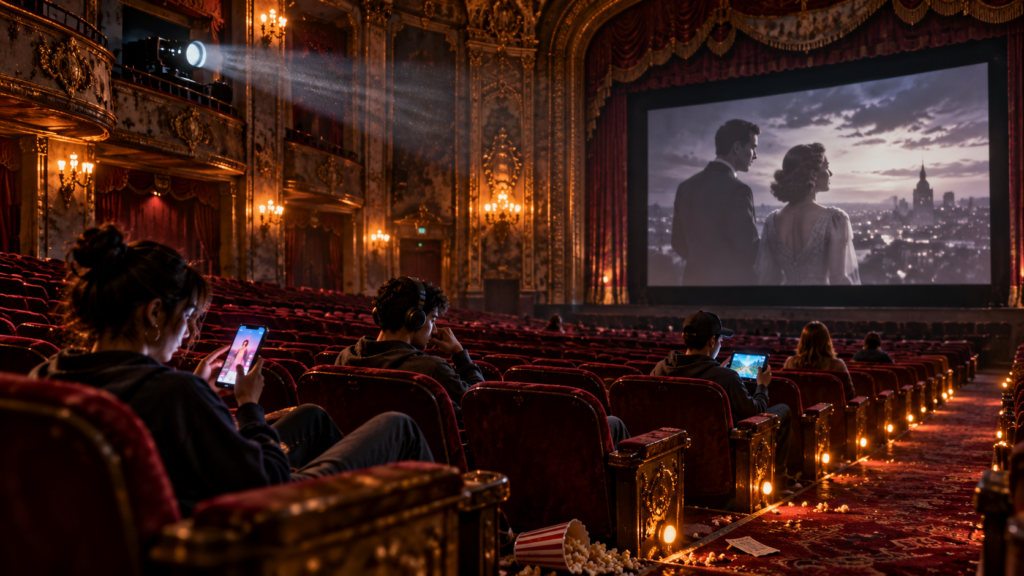
There was a time when major Hollywood releases would rock the entertainment industry.
Fans would speak about upcoming movies for months and years. Big films dominated popular culture. Movie stars were larger than life, and Hollywood seemed to sit at the very center of the entertainment world.
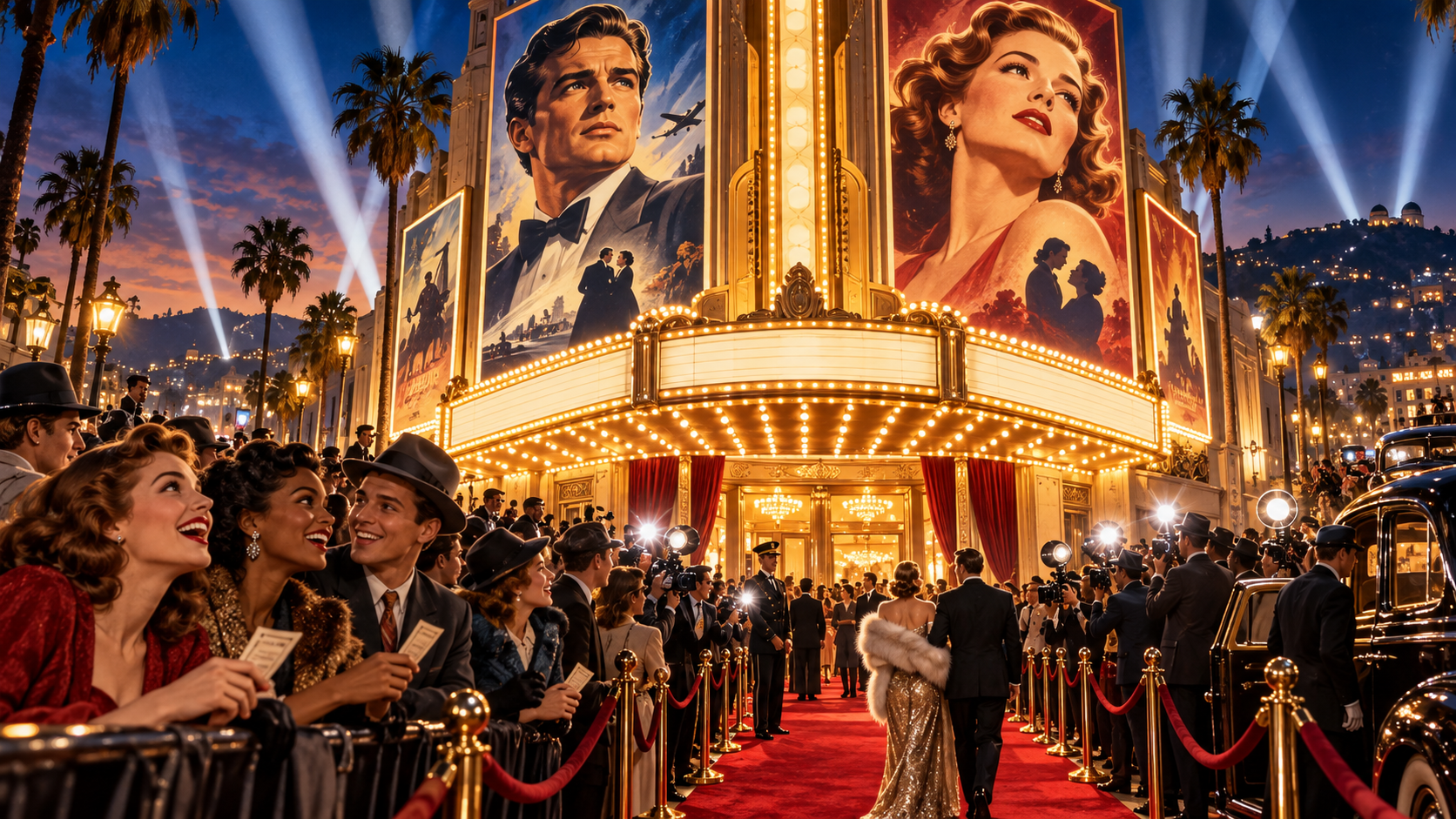
I am starting to wonder whether that era is ending.
I do not mean that movies are going to disappear or that we will see Hollywood dying. Of course that will not happen. Major studios will continue spending enormous sums of money, franchises will continue to make billions, and people will continue going to cinemas.
What I mean is that Hollywood seems to have lost something far more important: its cultural dominance.
And I think several things have strongly contributed to that.
Television improved drastically
The first major change was television.
There was a time when television shows felt like a lower form of entertainment than cinema. Major actors only starred in large Hollywood productions. Television was where careers began, ended, or dwelled.
Fast-forward the tape to today, and that has changed dramatically.
One could argue that The Sopranos set this trend into motion, and Game of Thrones then took it to a completely different level.
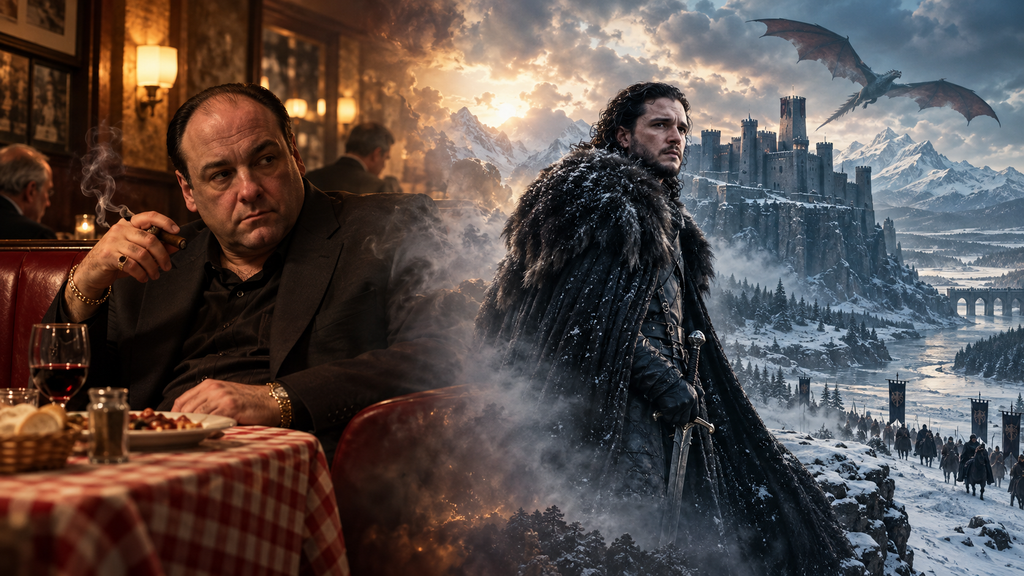
All of a sudden, television and its shows could feel just as cinematic, ambitious and culturally important as major Hollywood productions. Actors like Anthony Hopkins and Ed Harris could appear in Westworld without anybody thinking they had somehow fallen from grace. If anything, it most likely improved their careers even more.
One major advantage
One cannot deny that there is an obvious advantage to television series when compared to movies. If, for example, a director is adapting a long book or series of books, a two-hour movie gives the director just that, meaning two hours. He or she will therefore have to rush things and omit large parts of the novel.
A series, on the other hand, might give the directors 10+ hours in one season that might then be followed by many more. Among other things, this will provide the showrunners with far greater possibilities for things such as character development.
The universes of modern TV series can expand at unprecedented levels, and important parts of the source material no longer have to be compressed into a few scenes. In my opinion, claiming that television series are the closest thing to books that one can get on screen is justified and accurate.
The important part played by streaming
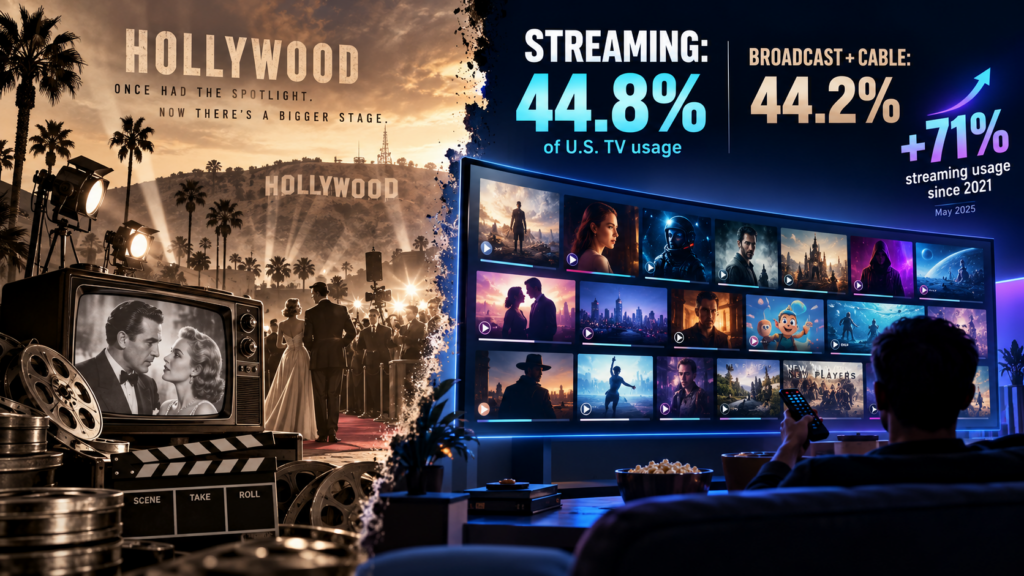
Streaming is something that has also contributed strongly to this change that we’ve seen in the world of show business. According to Nielsen, streaming accounted for 44.8% of all television usage in the United States in May 2025, overtaking both broadcast and cable combined for the first time. The same source also reported that streaming usage had increased by 71% since 2021. As you can see, there are new players in town, so Hollywood no longer has the field to itself.
Smartphones changed the way younger audiences consume entertainment
Another major factor is the smartphone.
For Generation Z in particular, smartphones are not just phones. They can be televisions, cinemas, news sources, gaming devices, social networks and entertainment systems, all in the same device.
That fundamentally changes what Hollywood is competing against.
A movie asks you to sit down and give it two hours of attention. A smartphone offers you something new every few seconds: TikTok, YouTube, Instagram, news, messages, memes, games, podcasts, livestreams, short videos, endless recommendations and more or less anything you want.
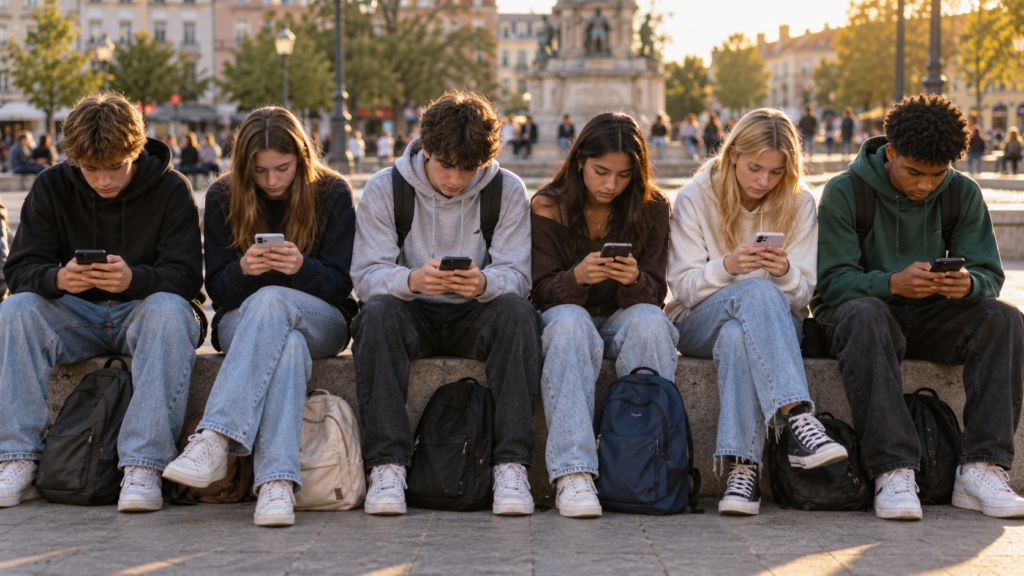
Furthermore, unlike film studios, the different algorithms in smartphones and all their apps are constantly learning what the consumer wants to see more of.
How can the movie industry compete with something like that?
Deloitte’s 2025 Digital Media Trends research found that 56% of Gen Z respondents said social-media content was more relevant to them than traditional television and movies. Gen Z also spent 54% more time than the average consumer on social platforms and user-generated content, while spending 26% less time watching TV and movies.
This is not just about attention spans in some simplistic sense. It is about the entire structure of entertainment changing.
Hollywood still largely asks the audience to choose one product and stay with it. The smartphone offers constant choice, instant gratification and almost perfect personalization.
I have written before about how deeply smartphones have changed modern life. In that article you can get a very clear idea about how I feel about this development, and how I certainly see problems related to smartphones and the way they affect people.
Even teenagers themselves seem increasingly aware of how time-consuming these devices can become. Pew Research Center found that 45% of U.S. teens said they spent too much time on social media, while 44% said they had cut back on their smartphone use.
In my opinion, smartphones play a vital role in diminishing the role of movies and of Hollywood. It’s not because Gen Z have a different mindset or anything like that, it is because they have way more options than previous generations did when it comes to entertainment.
Younger audiences are looking elsewhere
Smartphones are just one of the many types of electronics and devices that are making people forget about Hollywood.
Movies are no longer competing only with other movies. They are competing with virtually everything.
Hollywood is now up against YouTube creators, TikTok personalities, streamers, podcasts, gaming, documentaries, independent media and social platforms.
Deloitte also found that roughly half of Gen Z respondents felt a stronger personal connection to social-media creators than to television personalities or actors. That would have been unthinkable 20 years ago.
Movie stars used to dominate celebrity culture. Now a teenager may care far more about a YouTuber, streamer or TikTok creator than about Hollywood actors.
There are only so many hours per day, and Hollywood now has to fight for every one of them.
Real life has become stranger than fiction
There is another reason why I personally watch fewer fictional movies, and I suspect I am not alone when it comes to that.
Reality has become more compelling.
Look at the world around us: Epstein, Gaza, Ukraine, political scandals, intelligence operations, suspicious deaths, corruption, wars, conspiracy allegations and court cases involving the rich and powerful.
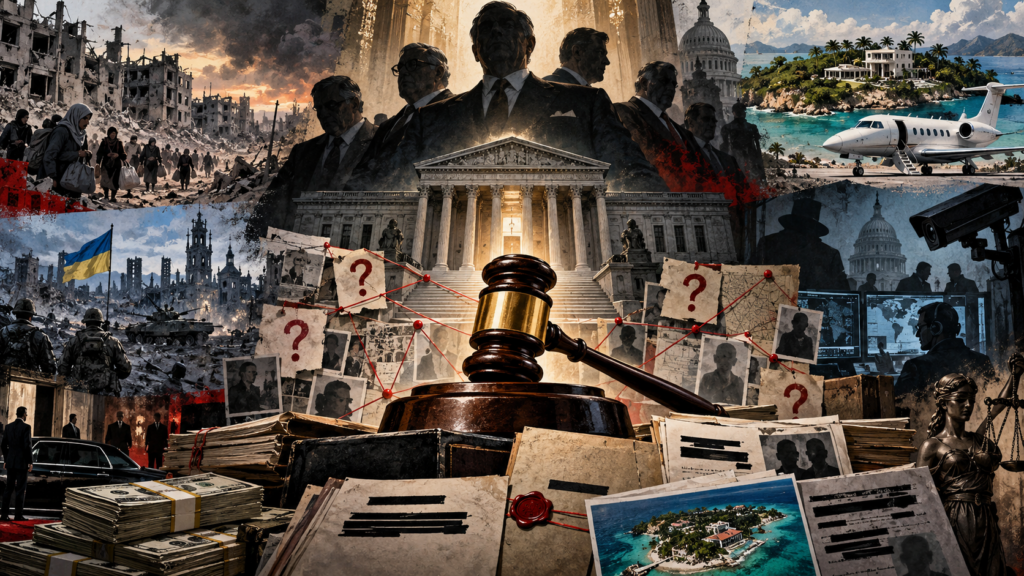
Sometimes the real world feels like a fictional thriller, except it is actually happening in reality.
I realized a while ago that almost everything I watch now is documentary-based, investigative or connected to real events.
I did not decide one day to stop watching fictional movies and series. It simply happened.
The last time I went to the cinema is when I was in Thailand at the beginning of the year. And to be completely honest, one of the main reasons for going was the air-conditioning.
Everything listed above tells me something.
Fiction has to compete with reality now, and reality has become incredibly difficult to beat.
The woke issue
There are people who argue that the whole woke issue doesn’t exist anymore, but I think it clearly does. Just look at how many people complain about it. That should tell the deniers something.
I believe Hollywood has alienated part of its audience by allowing political and ideological messaging to become too visible in its productions.
Call it wokeness, forced representation, political correctness or whatever term you prefer. The terminology is less important than the effect.
There is a clear difference between a film naturally containing political ideas and one making the viewer feel as if the message came first and was forced upon them while the story came second.
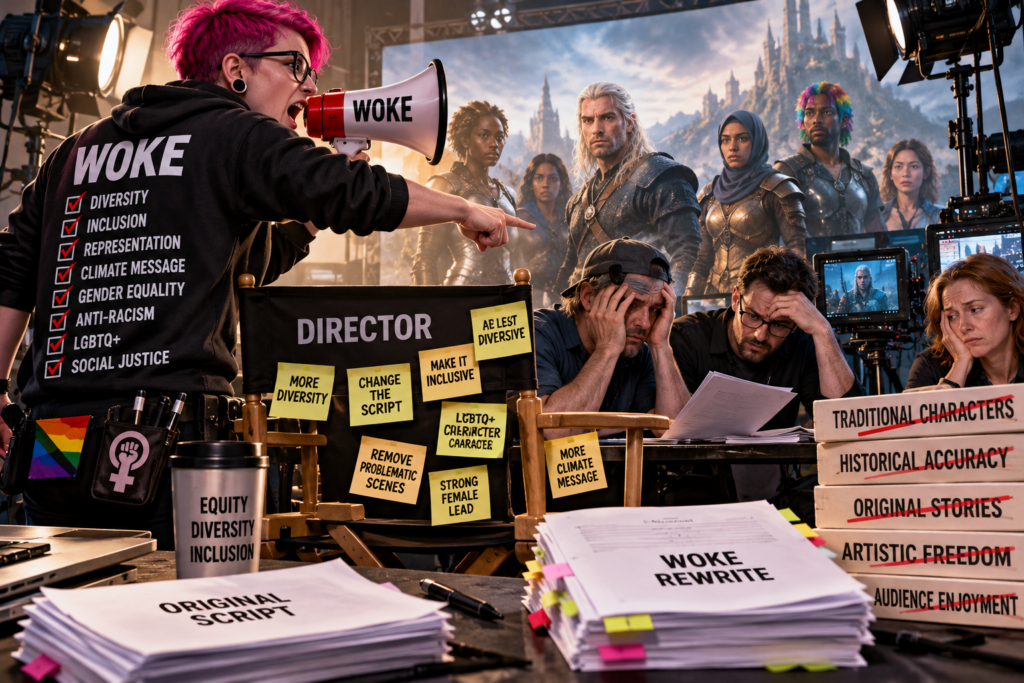
There is also a difference between genuine diversity and inserting diversity in a way that feels historically or narratively artificial.
When audiences start noticing the political message more than the character or the story, the illusion is broken.
That is the problem.
I am not saying that I consciously boycott movies because I think they are woke. I don’t. Instead, something more simple happens naturally:
I lose interest.
And indifference may actually be more dangerous to Hollywood than anger. An angry audience is still engaged. An indifferent audience has already gone somewhere else.
(Spoiler warning!) One personal example is when my buddy and I went to see Conclave in Medellin, Colombia, sometime in 2024. The film builds up tension toward a major revelation involving the newly elected pope. In the end, the character turns out to be intersex, and I thought to myself: Was that really supposed to be the great shocking twist?
The problem for me was not that such a character exists. The problem is that I could see a certain message being inserted into the story in a way that makes it feel like it was forced upon us.
Also, they made something pretty insignificant look as if it was the end of the world. Getting political and societal messages forced down our throats is not something I appreciate when going to the cinema to just get entertained for an hour or two. It’s a clear overstep, and two things that should be separated.
Once you start seeing the machinery behind the film, it gets harder to lose yourself in it and become immersed.
Hollywood’s scandals have damaged the illusion
There is another factor that I think is often overlooked: Hollywood has damaged its own image.
For generations, Hollywood sold glamour. Its stars were presented as beautiful, talented, sophisticated and almost larger than life.
Then the scandals began piling up.
Harvey Weinstein became the most obvious symbol of the collapse. Allegations against him helped ignite the #MeToo movement. His original 2020 New York conviction was overturned in 2024 because of trial-procedure issues, but in a 2025 retrial he was convicted on one sex-crime count; a separate rape count ended in a mistrial. He also remains subject to a California conviction.
Kevin Spacey’s career was ruined after sexual-misconduct allegations emerged in 2017. However, people tend to forget that it is important to distinguish allegations from legal findings: Spacey was acquitted in 2023 of all nine criminal counts he faced in a UK trial and has denied wrongdoing. The point here is not to retry the case, but to note how dramatically the scandal altered the public image of one of Hollywood’s best and most respected actors. And it did so even before the allegations had been tested in court.
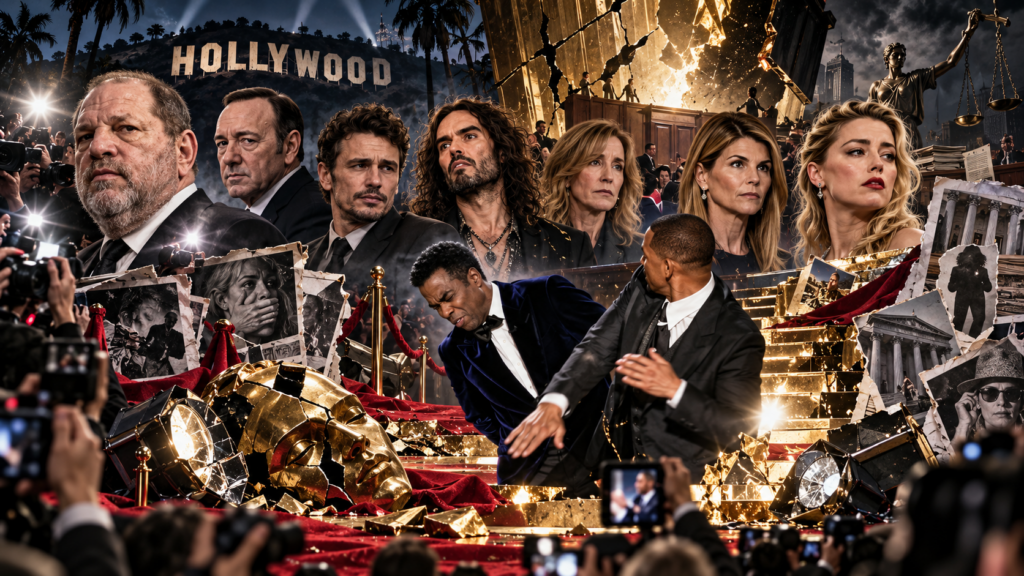
I feel like the #MeToo-movement went overboard, especially when it was at its peak, and Kevin Spacey was clearly one of the victims of that. I am not defending his behavior, but I feel like the implications it had for his career have been unfair. The principle of ‘innocent until proven guilty’ clearly does not seem to apply in the court of public opinion surrounding #MeToo and similar movements. The media is also clearly to blame when it comes to various sentiments going overboard.
Anyway, there is definitely a problem with sexual predatory in Hollywood, one case being doubtful does not change that. James Franco faced allegations of sexually inappropriate behavior from former acting students and others, and later reached a settlement in a civil lawsuit brought by former students. Again, a civil settlement is not the same thing as a criminal conviction, but the controversy clearly damaged Franco’s and Hollywood’s reputations.
Russell Brand has faced an even more serious legal situation. British prosecutors charged him in 2025 with rape and several other sexual offences involving four women. Brand has denied the allegations and said his relationships were consensual.
Scandal in Hollywood has certainly not been limited to men.
Felicity Huffman pleaded guilty in the U.S. college-admissions scandal to conspiracy to commit mail fraud and honest-services mail fraud. She was sentenced to 14 days in federal prison after admitting participation in a scheme to fraudulently inflate her daughter’s entrance-exam score.
Lori Loughlin also pleaded guilty in the same scandal. She admitted to conspiracy to commit wire and mail fraud and was sentenced to two months in prison after her daughters were falsely presented as crew recruits in connection with admission to USC.
Amber Heard’s courtroom battle with Johnny Depp became one of the biggest celebrity spectacles of the modern era. Whatever one’s view of the case, it turned the private collapse of a Hollywood marriage into global entertainment and inflicted enormous reputational damage to Heard more than to Depp. I do not only base that on the fact that Depp won the case, I am also referring to Heard’s behavior during the trial which at times seemed really fake.
The point is not that every allegation proves guilt, or that every scandal is comparable. They are not.
Another unforgettable moment that really damaged and rocked Hollywood’s polished image came at the 2022 Academy Awards when Will Smith walked onto the stage and slapped Chris Rock after Rock made a joke about Smith’s wife Jada Pinkett Smith. The incident overshadowed the ceremony itself, and the Academy later banned Smith from attending Academy events for ten years.
The Smith incident was another moment when the carefully managed glamour of Hollywood suddenly gave way to something raw, chaotic and very public. My theory is that it was extra damaging to Hollywood that it was Will Smith doing something insane like that. Smith, whose perceived public persona was more or less perfect prior to this incident, turned out to be human after all. And the damage that he did to himself is tragic, turning his greatest night into his worst one at the same time. (Smith won an Academy Award the same night for Best Actor for his role in the biographical film King Richard.)
The larger point is that Hollywood once depended heavily on mystique.
Studios controlled public images. Audiences knew relatively little about what actors and producers did behind closed doors.
Social media, investigative journalism, court livestreams and the internet have destroyed much of that barrier.
The curtain has been pulled back.
And what people saw behind it was not always pretty. It shows that Hollywood actors aren’t superhumans who stand above the rest of us. Rather they are human indeed, and all the money and fame give them bigger opportunities to misbehave in ways that can cause greater damage. Damage that also attracts far greater publicity when it is revealed to the public.
And then Hollywood invited Ricky Gervais
Of course, if Hollywood needed any additional help destroying its own mystique, repeatedly inviting Ricky Gervais to host the Golden Globes is the way to do it. And that is exactly what was done. Five times, in fact.
Gervais spent those appearances doing something Hollywood normally tries very hard to avoid: openly mocking the industry, its celebrities, its hypocrisy and its self-importance — directly to their faces. It’s TV history, and a must-see if you haven’t seen it.
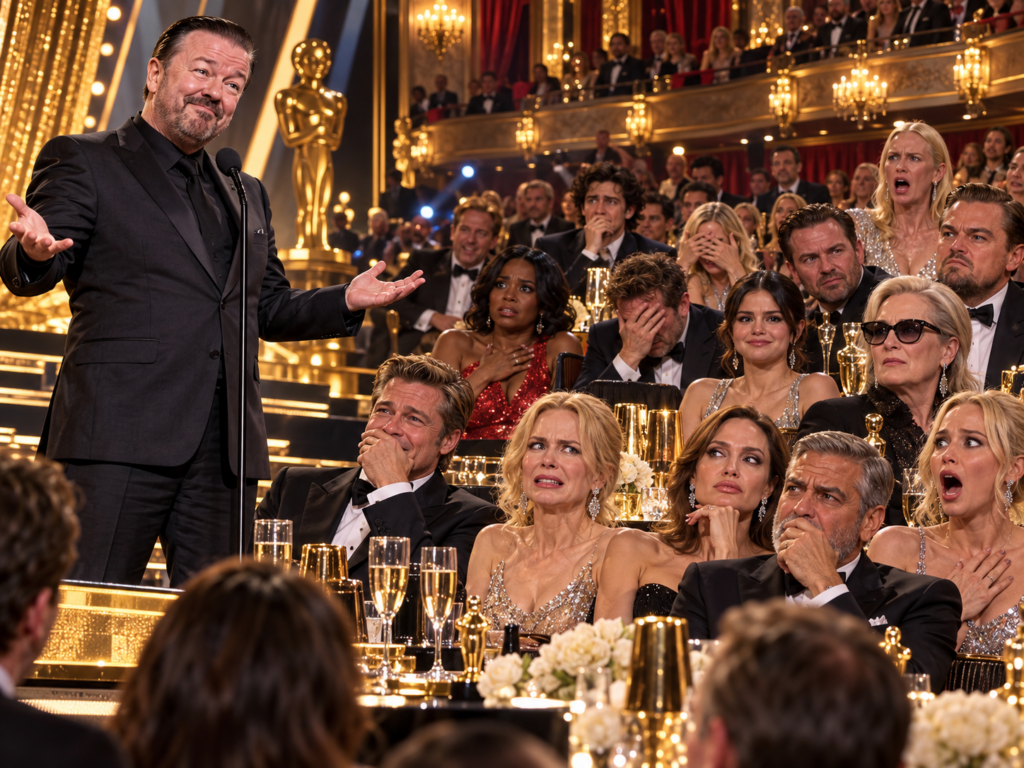
In a strange way, Gervais’s speeches perfectly captured the broader change in how people began viewing Hollywood. The stars were no longer untouchable icons. They were people sitting nervously at very expensive tables while a comedian reminded the rest of us that the whole spectacle was, at least partly, ridiculous. And it was really annoying to see how easily offended these multimillionaires are. It’s like they tried to play the victim-role and make us feel sorry for them.
Gervais himself later explained the appeal rather neatly: audiences knew he was not beholden to the people in the room and did not particularly care about what studios or producers thought of him. And I really respect him for that and already admired him a lot before this.
So perhaps another reason for Hollywood’s decline should simply be:
They invited Ricky Gervais to host the Golden Globes.
Hollywood may have lost something it cannot easily recover
I do not think any one of these things can explain Hollywood’s decline on its own.
It is most likely the combination of them all that is the cause.
Television improved.
Streaming became dominant.
Smartphones reshaped entertainment habits.
Social media stole attention.
Younger generations developed stronger connections with online creators than traditional celebrities.
Real life became more compelling than fiction.
Political messaging alienated many viewers.
Scandals damaged Hollywood’s glamorous image.
Audiences suddenly had a thousand alternatives.
And Ricky Gervais was invited to host the Golden Globes (five times).
This is a dangerous combination for Hollywood.
Hollywood might not be dead.
But the version of Hollywood that once dominated popular culture may already be gone, and I find it hard to believe that it will ever come back to its former glory in its traditional form.
Maybe the best question isn’t:
“When did Hollywood die?”
It most likely is:
“When did we stop caring about Hollywood?”