
There are several reasons why ice hockey will probably never become as globally popular as, for example, football. Two obvious obstacles are the cost of playing the sport and the need for access to an ice rink.
In this article
When it comes to cost, ice hockey equipment is something that can be extremely expensive.
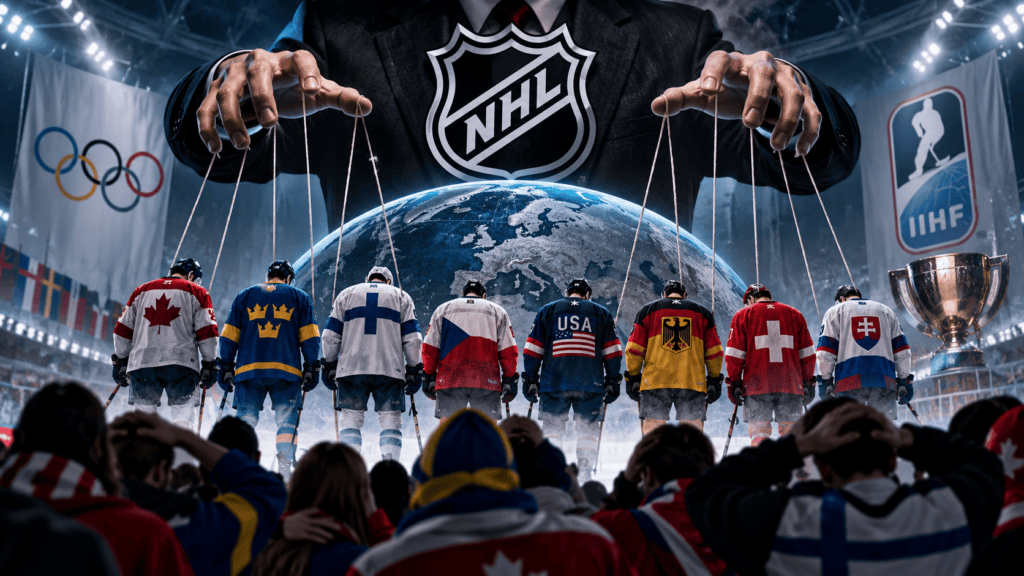
The international aspect of ice hockey is pushed aside by the NHL
For someone like me, who comes from Sweden, international tournaments are potentially the most interesting part of ice hockey.
I say “potentially” because all the major international ice hockey tournaments that I have followed over the years have had one thing in common: in one way or another, they have all been negatively affected by the enormous influence of the NHL.
To be more precise, the NHL has so much power over the sport that its schedule and participation agreements play a major role in determining when national teams can gain access to their best players.
That matters because most of the world’s top-tier male ice hockey players compete in the NHL.
The international tournaments
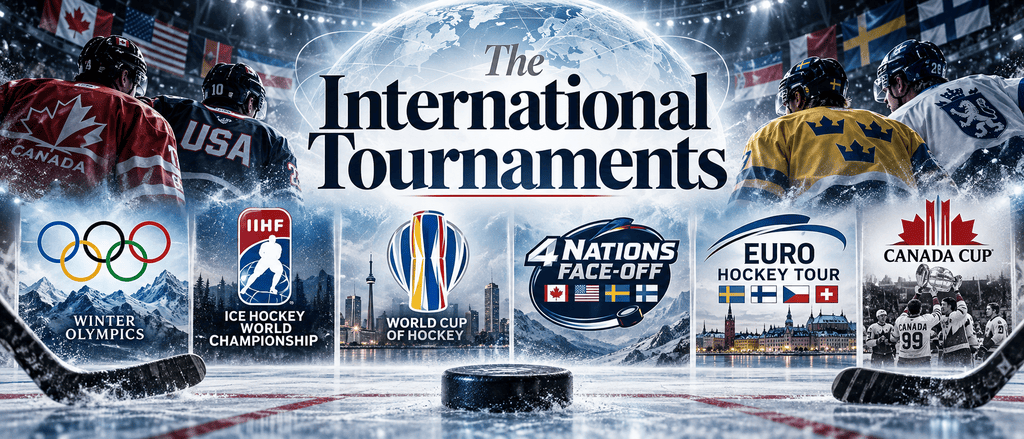
The exact way in which the NHL affects international ice hockey varies depending on the tournament.
Let’s take a look at the biggest international competitions in the sport. As we do so, I will explain why, in my opinion, each of them has been negatively affected by the NHL.
The Winter Olympics
At the time of writing, the Milano Cortina 2026 Winter Olympics finished several months ago. Although the Games were spread across several locations in northern Italy, the men’s ice hockey tournament itself was played in Milan.
Despite the Winter Olympics obviously including many other sports besides ice hockey, the Olympic ice hockey tournament is still the biggest international competition that the sport has to offer.
One reason for this is that the Winter Olympics only take place once every four years. That makes the tournament feel far more special than the Ice Hockey World Championships, which are held annually.
Historically, however, the quality of the Olympic tournament has depended heavily on whether NHL players were allowed to participate.
The 1998 Olympics in Nagano, Japan, were the first Winter Games to include NHL players. NHL players subsequently competed in 2002, 2006, 2010 and 2014, before missing the 2018 and 2022 Olympics.
Thankfully, they returned in 2026, and there are also plans for NHL players to participate in the 2030 Winter Olympics.
That is a very positive development.
Clashing schedules
One of the major historical problems with NHL participation in the Olympics has been the fact that the tournament occurs in the middle of the NHL regular season.
More specifically, the Winter Olympics take place in February.
The NHL has previously raised concerns about shutting down its season, along with insurance costs, travel expenses, injury risks and the disruption caused to the league schedule.
I understand that these are real considerations.
At the same time, they have always frustrated me.
We get very few opportunities to see national teams featuring virtually all of their best players. Would it really be unreasonable for the NHL to pause for a few weeks every four years so that the sport can showcase the highest possible level of international competition?
Historically, the league has often appeared reluctant to accept that disruption.
From a fan’s perspective, I have always found that disappointing.
Insufficient preparation time
Even when NHL players participate, another problem remains: the amount of preparation time available to national teams.
For the 2026 Olympics, the NHL schedule paused on February 6, while the men’s Olympic tournament began on February 11.
That gave NHL players only a few days to finish their club commitments, travel to Italy, recover from the journey and begin training with teammates they rarely play alongside.
That is obviously better than having no NHL players at all, but I still think the national teams deserve more preparation time.
International teams are not regular club teams.
The players need time to learn each other’s playing styles, develop line combinations and build team chemistry.
Without enough preparation, early tournament games can sometimes feel more like warm-up matches rather than contests between fully developed teams.
And remember: this is the “good” scenario, because at least the best NHL players are participating.
World Cup of Hockey — formerly the Canada Cup
Not to be confused with the Ice Hockey World Championships, the World Cup of Hockey is another best-on-best international tournament.
The modern World Cup is jointly organized by the NHL and the NHL Players’ Association.
The unusual thing is that, historically, it has not operated on the kind of predictable schedule seen in most major international sports.
The World Cup of Hockey has been held in:
- 1996
- 2004
- 2016
The next edition is scheduled for February 2028.
That means there will have been gaps of eight years, twelve years and then another twelve years between editions.
The World Cup succeeded the Canada Cup, which was held in:
- 1976
- 1981
- 1984
- 1987
- 1991
I could be wrong, but I struggle to think of another major sport in which one of its supposedly premier international tournaments has historically been held on such an irregular basis.
Thankfully, this also appears to be changing.
The NHL and NHLPA are now aiming for a regular schedule of best-on-best international hockey, alternating between the Winter Olympics and the World Cup every two years.
That would mean the 2026 Olympics, the 2028 World Cup and the 2030 Olympics forming part of a predictable international cycle.
This is precisely the type of development I have wanted to see for years.
The World Cup and North American influence
I previously viewed the World Cup as overly North American in character, although this criticism needs some qualification.
The 2016 tournament, for example, was played entirely in Toronto.
However, earlier World Cups were not exclusively North American. The 1996 tournament included games across several countries, and the 2004 competition also included games in Europe.
The 2028 tournament represents another improvement in this regard.
It will be hosted in Calgary and Edmonton in Canada, as well as Prague in Czechia.
That gives the tournament a more genuinely international character, and I welcome that change. The problem, however, is that the playoff games tend to be played in North America.
The NHL creating its own “national teams”
One decision regarding the World Cup that I remember being particularly critical of came during the most recent tournament in 2016.
In addition to the regular national teams, two artificial teams were created: Team Europe and Team North America.
Team Europe consisted of players from European countries that had not been given their own places in the World Cup.
Team North America consisted of Canadian and American players aged 23 and under.
Presumably, the idea was to improve the competitive level of the tournament.
Personally, I hated it.
Creating teams like these made the competition feel more artificial and less like a genuine international tournament.
My prejudiced side could not help seeing it as something typically American.
Team Europe actually made it all the way to the final, where they were defeated by Canada.
Personally, in a tournament of this kind, I want national teams and national teams only.
Imagine, for example, if the FIFA World Cup suddenly started featuring artificial mixed-nationality teams.
The following countries were represented in Team Europe:
- Austria
- Denmark
- France
- Germany
- Norway
- Slovakia
- Slovenia
- Switzerland
The fact that some of those countries were not given their own places demonstrates one of the problems with the format.
Slovakia, for example, reached the semi-finals of the 2026 Olympic tournament.
Switzerland has also established itself as a serious international hockey nation.
Germany may not always be a gold-medal contender, but it has elite players such as Leon Draisaitl of the Edmonton Oilers.
Denmark also showed what smaller hockey nations are capable of when it defeated Canada 2–1 in the quarterfinals of the 2025 Ice Hockey World Championships and reached the semifinals for the first time.
I mention these examples because there are more national teams capable of competing seriously than an artificial format such as Team Europe might suggest.
I would much rather see actual countries participating than “fake” teams like Team Europe and Team North America.
Ice Hockey World Championships
If there is one tournament that perfectly illustrates what I mean when I criticize the structure of international ice hockey, it is the Ice Hockey World Championships.
Once again, this is not the same tournament as the World Cup of Hockey.
It is the official world championship organized by the International Ice Hockey Federation, the IIHF.
The positive thing about this tournament is that it is held regularly.
Unfortunately, I would argue that it is held too regularly.
The Ice Hockey World Championships take place every year.
That, in my opinion, reduces the tournament’s sense of importance.
When something happens every single year, it simply does not feel as special.
A “World Championship” without all the best players
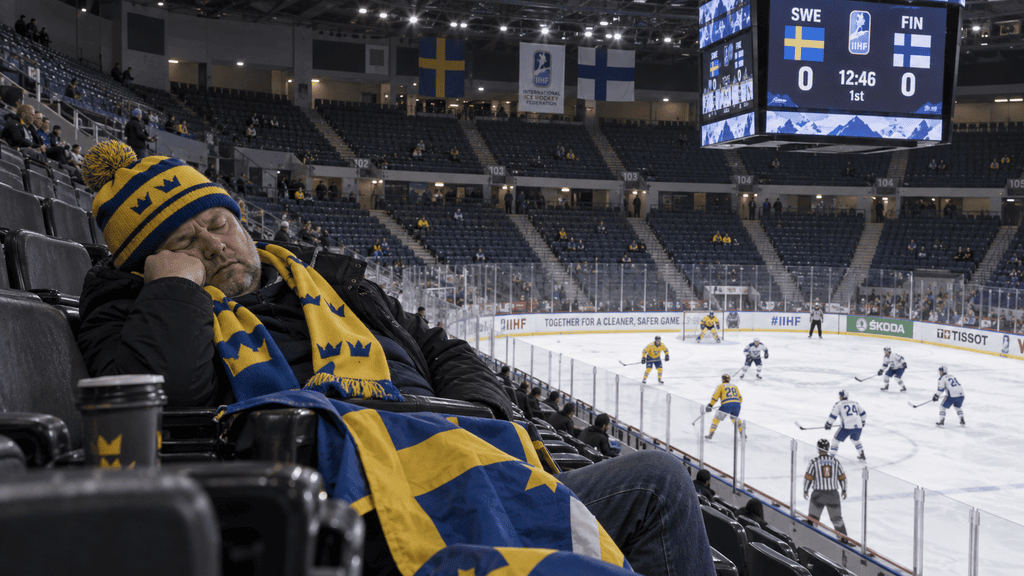
The biggest problem with the Ice Hockey World Championships is that the tournament takes place while the NHL postseason is still ongoing.
More specifically, it overlaps with the Stanley Cup playoffs.
As a result, national teams cannot necessarily use all of their best players.
In many ways, the World Championships become a lottery.
Teams can leave roster positions open and add players during the tournament until reaching the permitted roster limit.
That means the strength of a national team can depend partly on which NHL teams are eliminated from the Stanley Cup playoffs.
If a country’s best players belong to NHL teams still competing for the Stanley Cup, those players are unavailable.
If those clubs are eliminated early enough, however, the players may suddenly become available for their national teams.
That seems like a bizarre way to determine the strength of teams competing for a supposedly global championship.
Players not wanting to participate
Another problem is that many available NHL players are exhausted, disappointed or carrying injuries after an extremely long season.
Until 2025–26, the NHL regular season consisted of 82 games per team.
Beginning with the 2026–27 season, that schedule has expanded to 84 games, before even counting Stanley Cup playoff games.
It is therefore completely understandable that some players decline invitations to the World Championships.
I cannot really blame them.
I would also assume that the tournament being played every year contributes to players declining invitations.
Just like the annual format makes the competition feel less special to fans, it probably makes it feel less special to players as well.
That said, there have been plenty of occasions when teams without many NHL players have performed extremely well.
One possible reason is that these teams have often spent far more time playing together and building chemistry.
In my opinion, both the IIHF and the NHL have contributed to the problems surrounding international hockey.
The fact that the sport went for so long without a reliable system guaranteeing regular best-on-best competition was incredibly frustrating.
Personally, I could not care less about the World Championships in their current annual format.
The only time I might watch is when Sweden reaches the knockout stage.
Even then, I cannot say that I get particularly excited.
Other tournaments
Apart from the major tournaments mentioned above, the NHL has organized smaller international competitions from time to time.
These often feel more like commercial events to me than established championships.
4 Nations Face-Off
The most recent example was the 4 Nations Face-Off, organized by the NHL and NHLPA in February 2025.
The tournament consisted of Canada, the United States, Sweden and Finland.
It ran from February 12 to February 20 — nine days — with seven games played in Montreal and Boston.
The NHL did not hold its regular All-Star Weekend during the 2024–25 season, with the 4 Nations Face-Off taking its place on the calendar.
Canada eventually defeated the United States in overtime in the final.
Thankfully, it now appears that the 4 Nations Face-Off was a bridge towards something more permanent rather than another completely isolated event.
Euro Hockey Tour
Another competition is the Euro Hockey Tour, which is held annually.
It features European national teams and is divided into several smaller tournaments.
Because it normally takes place during the NHL season, it features players based in European leagues rather than NHL players.
The Euro Hockey Tour can essentially be compared to a regular league featuring national teams rather than clubs.
Personally, I find it about as uninteresting as international ice hockey can get.
My suggestions for improvement
If it were entirely up to me, the first priority would be better and more permanent cooperation between the NHL, the NHLPA, the IIHF and the national hockey federations.
However, I also have to acknowledge that the situation has improved significantly.
The return of NHL players to the 2026 Olympics was a major step forward.
The World Cup of Hockey will return in 2028.
NHL players are also scheduled to participate in the 2030 Olympics.
The stated plan is therefore moving towards exactly the sort of structure I have wanted: a major best-on-best international tournament every two years.
If that system actually continues, then the NHL deserves credit for finally addressing one of my biggest criticisms.
I would, however, still like national teams to receive more preparation time before these tournaments.
And I would also prefer international hockey to focus on a few genuinely important competitions rather than constantly creating additional commercial events.
As for the IIHF World Championships, I would personally stop holding them every year.
My preference would be a major international championship every four years, positioned two years apart from the Winter Olympics.
That would give international hockey something resembling the rhythm of international football seen from a European perspective: an important championship every two years without making either tournament feel routine.
Imagine:
- Winter Olympics
- two years later: World Championship or World Cup
- two years later: Winter Olympics
- two years later: World Championship or World Cup
That would give hockey fans regular best-on-best international competition while still making each tournament feel important.
The NHL/NHLPA calendar now appears to be moving in something close to this direction through the Olympics and the World Cup.
I sincerely hope it lasts.
What about Russia?
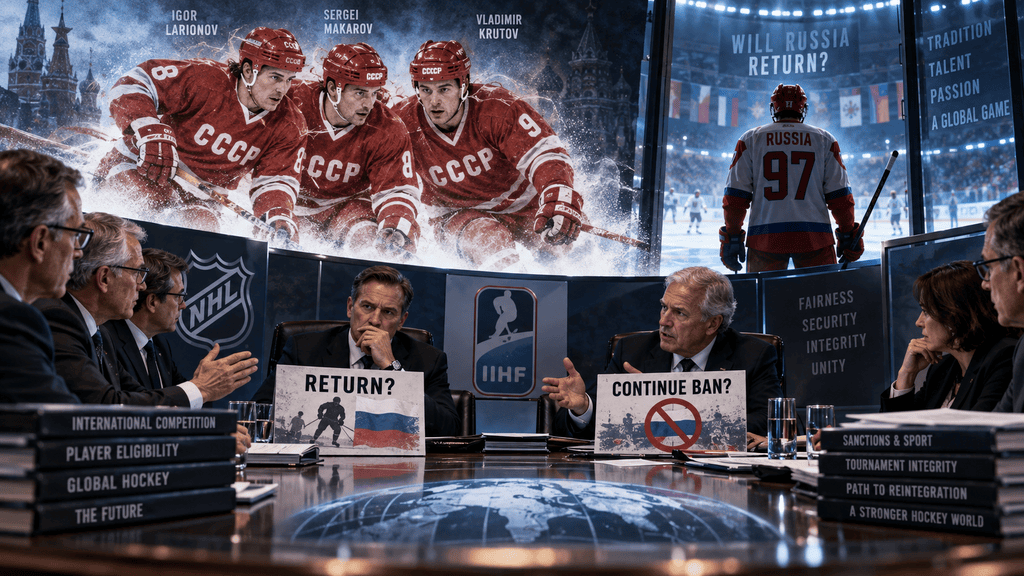
Russia creates another complicated issue.
From a purely sporting perspective, there is no question that Russia’s absence reduces the competitive strength of international ice hockey.
Russia was not part of the 2026 Olympic tournament and remains excluded from several major IIHF competitions.
However, the situation is no longer best described as a simple permanent blanket ban.
The IIHF is currently assessing Russian participation on an event-by-event basis.
For example, Russia will not participate in the 2027 Men’s World Championship, World Junior Championship or men’s and women’s U18 championships under the IIHF’s current decisions, while other eligibility questions may be reviewed separately.
From a purely hockey perspective, Russia’s absence is unfortunate.
Ice hockey has relatively few countries capable of realistically challenging for major international titles, so removing one of the traditional powers inevitably affects the competitive level.
A Russian national team featuring its best NHL players would certainly make tournaments more competitive.
At the same time, sports do not exist in a political vacuum, so I understand why the question is far more complicated than simply asking which teams would produce the best hockey.
There are obviously consequences of war that are vastly more serious than what happens in an ice hockey tournament.
Nevertheless, from a sporting perspective, I hope that circumstances eventually allow Russia to return to international hockey.
Finally
For years, I have felt that international ice hockey has failed to reach its potential.
The sport has some of the most talented athletes in the world, passionate national rivalries and tournaments that can be incredible when the best players actually participate.
The problem has always been consistency.
Fans should not have to wonder whether the best players will be available, whether the NHL will participate, whether another temporary tournament will suddenly appear or when the next World Cup will take place.
For once, however, there are reasons for optimism.
NHL players returned to the Olympics in 2026.
The World Cup returns in 2028.
Another Olympic tournament with NHL players is planned for 2030.
If this really becomes a permanent two-year cycle of best-on-best international hockey, then perhaps the NHL is finally beginning to fix some of the very problems that have frustrated me for so long.
I still believe international ice hockey could be organized much better.
But for the first time in quite a while, it seems to be moving in the right direction.
Further reading: my reflections on politics at the Winter Olympics. For the federation’s own coverage, visit the International Ice Hockey Federation.