

Table of Contents
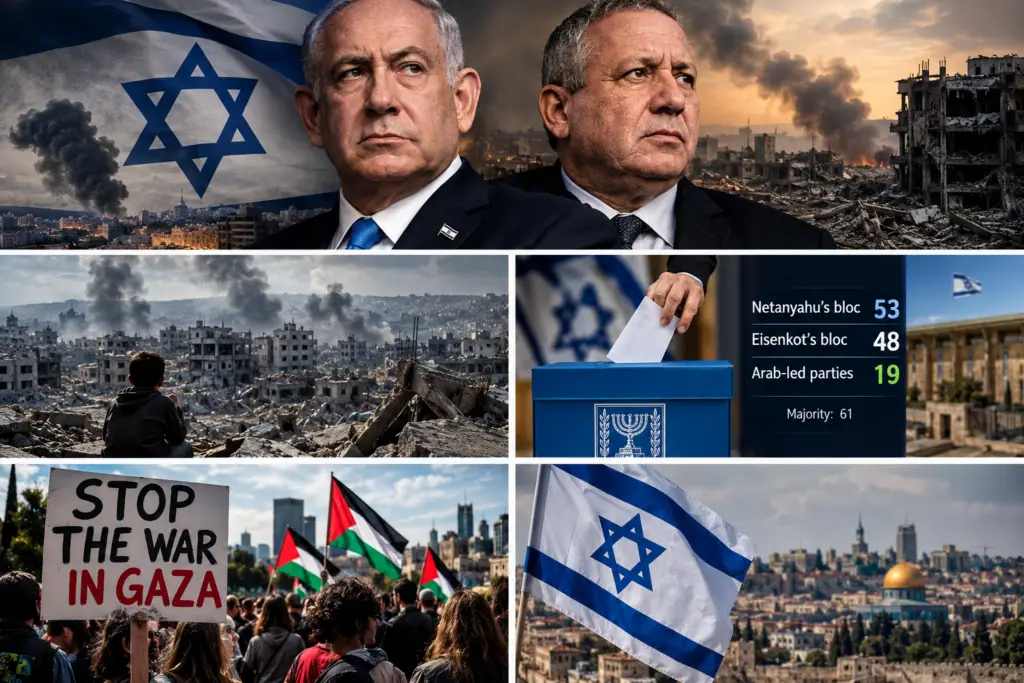
The results of Israel’s latest election have, in many ways, confirmed precisely what I feared beforehand. Although the process of forming a new government is far from over, the outcome raises some deeply troubling questions about the reality of Israeli society, the political choices available to its citizens and, perhaps most importantly, the way the country views the Palestinians and other nations.
What I find particularly astonishing, horrifying and straight out disgusting is the continued level of support for Benjamin Netanyahu, despite the enormous damage inflicted on Israel’s international standing and the catastrophic consequences of its military campaigns for Palestinians in Gaza, people in Lebanon and, more recently, Iran.
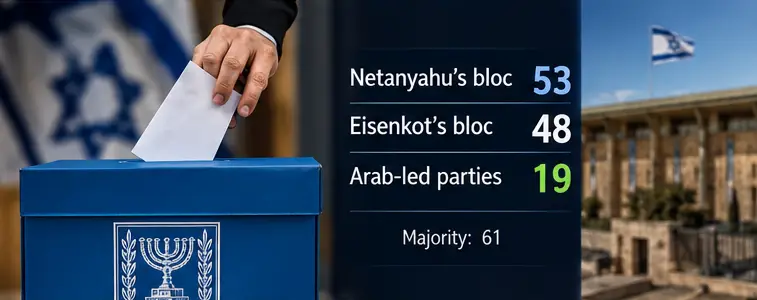
Of course, Netanyahu’s political future is not yet settled. The final results have left his bloc with 53 seats in the 120-member Knesset, while the opposition bloc led by Gadi Eisenkot has secured 48. The Arab-led parties have won 19 seats. A majority requires 61, meaning that neither of the two main blocs can govern alone.
Nevertheless, these figures tell us something important. Netanyahu’s political camp has lost its majority, but it remains a substantial force. In other words, a large part of the Israeli population supports Netanyahu’s genocide in Gaza and the racist policies of his government. Meanwhile, the alternative is not necessarily the dramatic political and moral departure from the country’s present course that some commentators would like us to believe.
The myth of the extremist fringe
For years, politicians such as Itamar Ben-Gvir and Bezalel Smotrich have frequently been portrayed internationally as representatives of an extremist fringe within Israeli society. They are often discussed as though they are unfortunate exceptions in an otherwise moderate political landscape.
But how convincing is that description when such politicians have been able to secure ministerial positions, exercise considerable influence over government policy and maintain significant electoral support?
Political leaders do not acquire that kind of influence in a vacuum. Their presence in government reflects a political constituency that is willing to support them, tolerate them or accept their participation in power.
This does not mean that every Israeli shares their views. No population is politically uniform, and it would be both inaccurate and unfair to suggest otherwise. The fact that the majority supports either Netanyahu or other far right-wing alternatives is what worries me. It is very misleading by the western media to pretend that the political forces represented by radicals such as Netanyahu, Ben-Gvir and Smotrich are merely a tiny collection of extremists with no meaningful support among the electorate.
The election results make that argument increasingly difficult to sustain.
Gadi Eisenkot and the Dahiya Doctrine
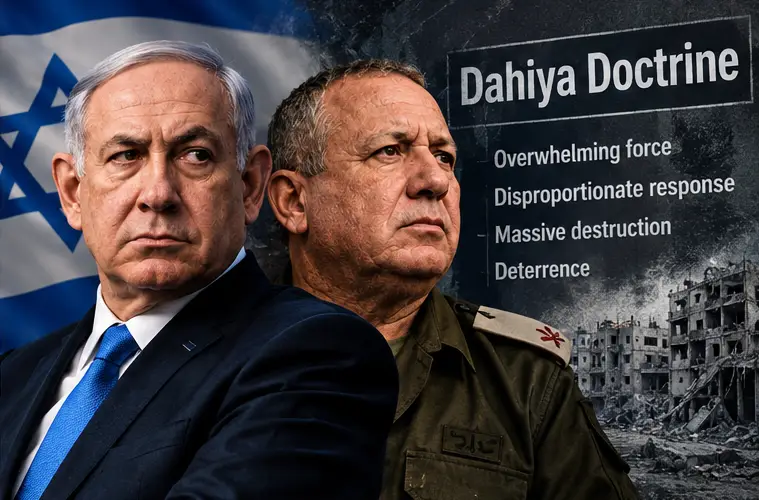
One of the reasons I remain deeply sceptical about the idea that Gadi Eisenkot represents a fundamentally different direction for Israel concerns his military background and, in particular, his association with a policy commonly known as the Dahiya Doctrine.
Eisenkot is a former Chief of Staff of the Israel Defense Forces and previously served as head of Israel’s Northern Command. In 2008, while serving in that latter position, he publicly described a military approach that subsequently became known as the Dahiya Doctrine.
The name comes from the Dahiya neighborhood in Beirut, a Hezbollah stronghold that was heavily bombarded by Israel during the 2006 Lebanon War.
The doctrine is based on the use of overwhelming and disproportionate force against areas from which attacks are launched. In an interview published in 2008, Eisenkot warned that what had happened in Dahiya would happen to villages in Lebanon from which Israel was attacked. He described the intended destruction as deliberate and said that, from Israel’s military perspective, such villages would be treated as military bases rather than civilian communities.
To be more precise, Eisenkot was quoted as saying:
“We will apply disproportionate force on it and cause great damage and destruction there.”
He also made clear that this was not simply a recommendation, but a plan that had been approved.
This is an extraordinary statement, particularly when considering the implications for civilians living in the affected areas.
To be clear, the Dahiya Doctrine is not simply a written instruction to kill civilians. Its stated military rationale is deterrence through overwhelming destruction. However, the deliberate adoption of disproportionate force in populated areas raises serious questions about civilian protection, proportionality and the distinction between combatants and civilians under international humanitarian law.
It is difficult to reconcile such a policy with the image of a moderate political alternative that some commentators might wish to construct around Eisenkot.
And this is precisely why I find the current political debate so troubling. Netanyahu’s record should certainly be examined, and I think he is a despicable person and politician, but replacing him with a former military commander who has publicly defended an approach associated with massive destruction and death of civilians does not automatically represent a fundamental change in Israel’s relationship with its neighbors, the Palestinians or the rest of the world.
There may be differences in personality, political style and domestic priorities. There may even be meaningful differences in how the two men would approach certain issues. But those differences should not be confused with a complete change of direction.
A change of government is not necessarily a change of policy
This brings me to a wider concern.
Much of the international discussion surrounding Netanyahu has focused on the assumption that he is the central problem. Remove him, the argument goes, and Israel can “return” to being a more moderate and reasonable country.
I am far from convinced!
There is a danger that the international media will present any successor as a democratic savior, allowing the country’s broader political and military conduct to escape the same scrutiny that has rightly been directed at Netanyahu.
A brilliant and useful observation was made by Professor Marandi, who has appeared on Piers Morgan Uncensored at several occasions and who is a great debater in my opinion. His argument, as I understood it, was that Netanyahu remaining in power could actually make it harder for Zionist-supporters, western media and Western commentators to continue pretending that the country’s problems are confined to one individual. If a successor is immediately presented as a moderate alternative, criticism of Israel could once again be reduced to criticism of Netanyahu personally.
I think there is something worth considering in that argument.
The issue is not whether Netanyahu is a particularly damaging political figure. There is ample reason to criticise his leadership, his decisions and his government’s conduct. The issue is whether the problems are considerably deeper than one man. And I am convinced that they are. Zionism existed before Netanyahu and will continue to do so long after he is gone unless people start opening up their eyes in regards to Israel.
The political support enjoyed by the far right, the treatment of Palestinians, the military doctrines employed by the Israeli armed forces and the unwillingness of major political parties to cooperate with Arab-led representatives all deserve examination in their own right. And they all say a lot about what type of country that Israel really is.
The Palestinian question barely seems to matter
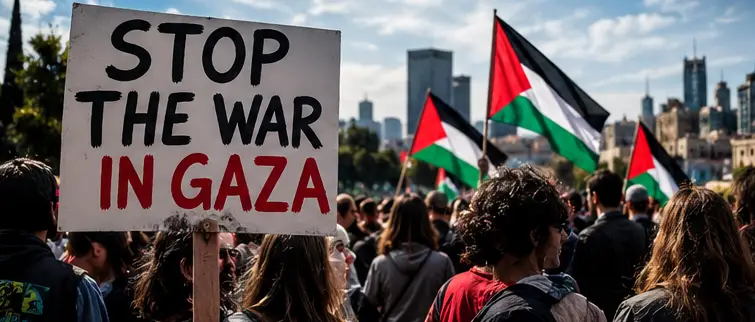
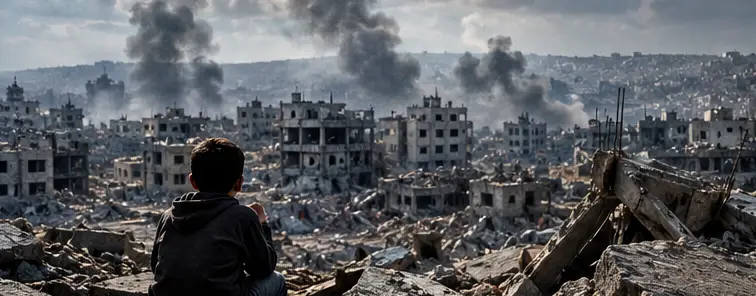
Another aspect of this entire debate is the apparent marginalization of the suffering in Gaza. To be more precise, the genocide in Gaza doesn’t even seem to be a small concern for many Israelis.
Since the attacks of 7 October 2023, there have been demonstrations in Israel against Netanyahu. But it is important to ask what those demonstrations have actually been about.
A considerable part of the protest movement has focused on the return of Israeli hostages, Netanyahu’s handling of the security situation and his political responsibility for the failures surrounding 7 October.
But where has the same level of sustained public pressure been when it comes to the destruction of Gaza, the enormous civilian death toll, the displacement of its population and the suffering of Palestinian children?
The distinction matters.
It is possible to oppose Netanyahu because he failed to protect Israeli citizens while simultaneously supporting the military campaign that has devastated Palestinian society. It is possible to demand the return of Israeli hostages without showing comparable concern for Palestinian civilians. This is precisely what large parts of the Israeli society seems to do.
And that is something which deserves much more attention, meaning the general view on Palestinians and other nationalities among the Israeli population.
I am not suggesting that every Israeli supports the destruction of Gaza, nor that the views of an entire population can be determined from election results alone. But when the devastation of an entire territory does not appear to become a defining issue in a national election, it is reasonable to ask what that tells us about the political climate.
The suffering of Palestinians should not become a secondary issue simply because they are not Israeli citizens.
The lives of children in Gaza are not worth less than the lives of Israeli children. The suffering of Lebanese civilians is not less deserving of attention. And the destruction of civilian communities does not become morally acceptable simply because a government describes its military objectives as security-related. This should not even have to be pointed out, it should go without saying.
The refusal to work with Arab political parties
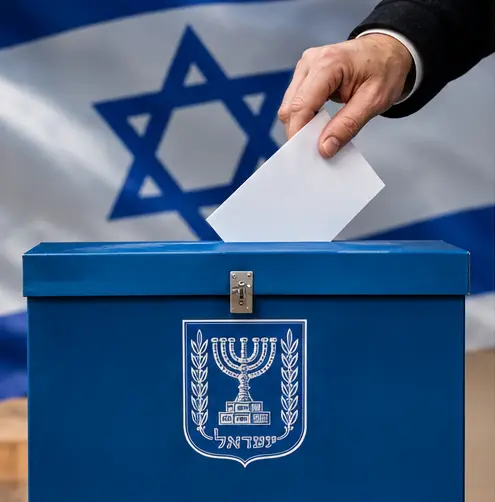
Another striking feature of the election is the position of the major political blocs towards the Arab-led parties.
The Joint List and Ra’am, two Arabic parties, have together secured 19 seats, a historic result. In a parliament where neither Netanyahu’s bloc nor Eisenkot’s opposition bloc has a majority, those seats could prove decisive.
Yet the willingness of the main political camps to cooperate with Arab-led representatives remains non-existent among all but one of the Jewish parties. That sounds like racism to me, and I am sure that it would be called out for being so by the media if it was instead the other way around.
This creates a rather extraordinary political situation. Arab citizens of Israel participate in the democratic process, vote for representatives and secure a substantial presence in parliament, yet their political influence is treated as something that the principal political camps would prefer to avoid.
What does this election really tell us?
Whatever happens next, I believe that everyone should resist the temptation to describe the Israeli election as a straightforward choice between extremism and moderation.
Netanyahu’s political record deserves severe scrutiny. His government has presided over a period of extraordinary destruction and international condemnation. The influence of Ben-Gvir and Smotrich is deeply concerning. And the treatment of Palestinians must remain central to any honest discussion of Israel’s future.
But Eisenkot’s background and his association with the Dahiya Doctrine also deserve serious consideration. A change of prime minister does not automatically mean a change in the policies, assumptions or military doctrines that have contributed to the suffering of civilians across the region.
I have argued before that countries should reconsider their diplomatic and economic relationships with Israel in light of its conduct. I continue to believe that all governments should cut off all ties with Israel. The way Israeli society seems to be developing, Israel has become a threat to the whole world, not only to its immediate neighbors.
What I find most disturbing about this election is not only that Netanyahu remains politically relevant, and how on Earth any fully functioning adult could even consider voting for him. It is also that the political alternative is not necessarily as different as traditional media and the people behind it would have us believe.
The international community should not be satisfied with replacing one Israeli leader with another and then declaring the problem solved.
The real question is whether Israel is prepared to reconsider its treatment of Palestinians, its approach to military force and its relationship with the millions of people living in the territories and neighboring countries affected by its policies. Right now, the answer to that questions seems like an obvious “NO”!
(Please notice that all of the images in this post are AI-generated.)
Related reading: See also Will Israel Change if Netanyahu Loses the Election? and Gaza From Above: The Humanitarian Crisis.